
AICE Marine Science FREE Resources
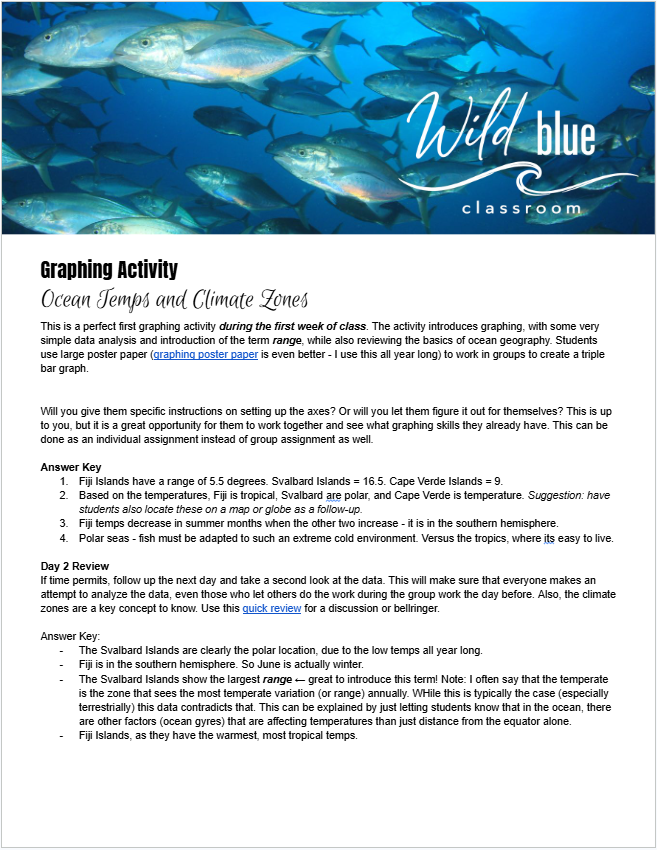
Group Activity | Graphing Ocean Temperatures
This activity reviews the polar, temperature, and tropical zones. You will need to provide students with paper to graph on. A large blank poster paper works if you want to do the activity in groups (which is a great way to review graphing) or plain graph paper if they are working individually. Graphing poster paper is even better!
Suggestion: Graphing poster or Graphing poster (I use these throughout the year)
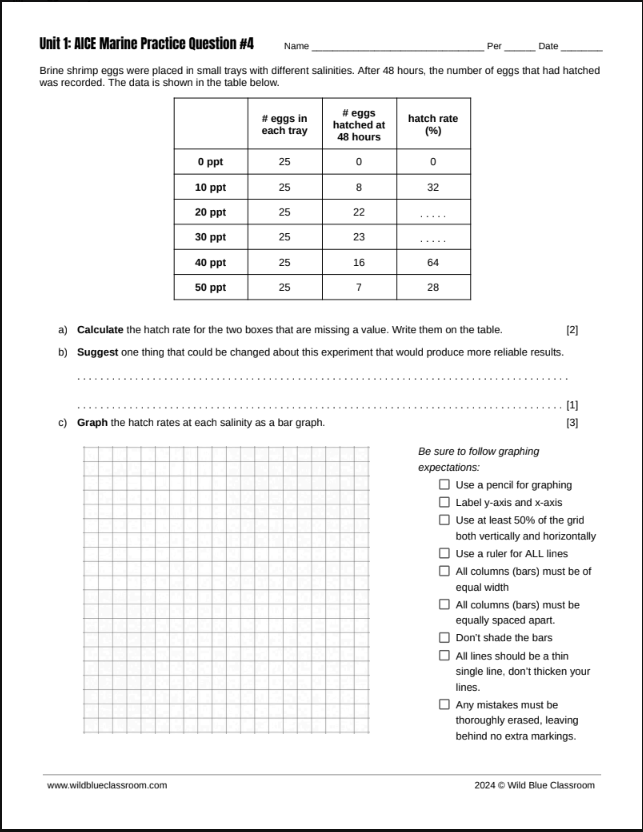
Exam Style Practice Questions | Unit 1.1, 1.2, and 1.3
If you’d like more of these, there is a set of them available on TPT for $12, for Units 1, 2, and 3. It also includes slideshows with the visuals (graphs, images, and data tables) on a slide so you can utilize it on a smartboard with your students.
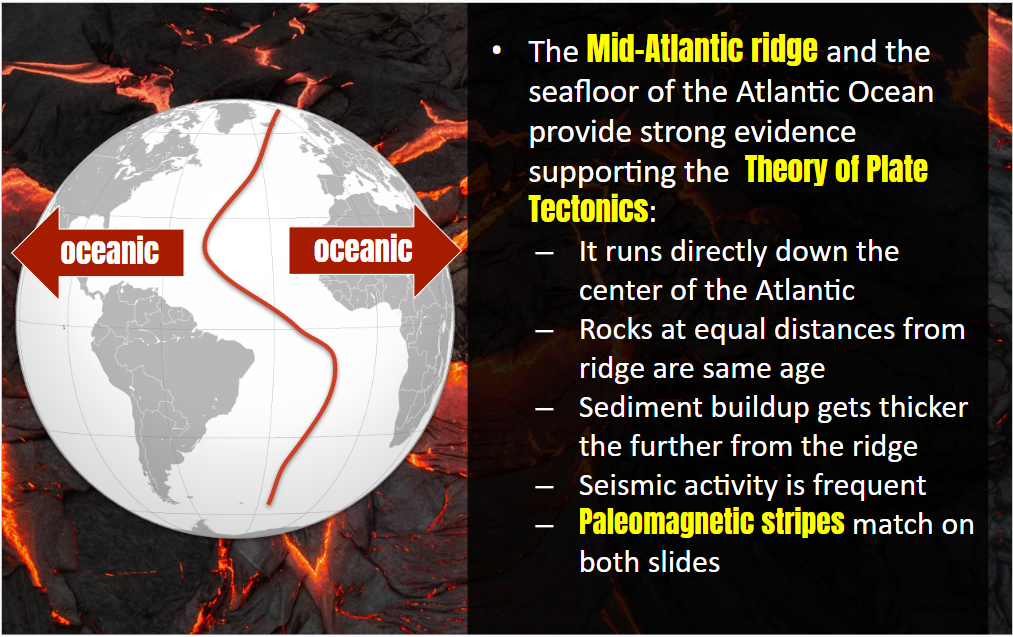
Notes and Notebook Activities | 2.1 Tectonics
Notes for Unit 2.1 Tectonics, with the printable handouts needed for the Notebook Activities included in the slides.
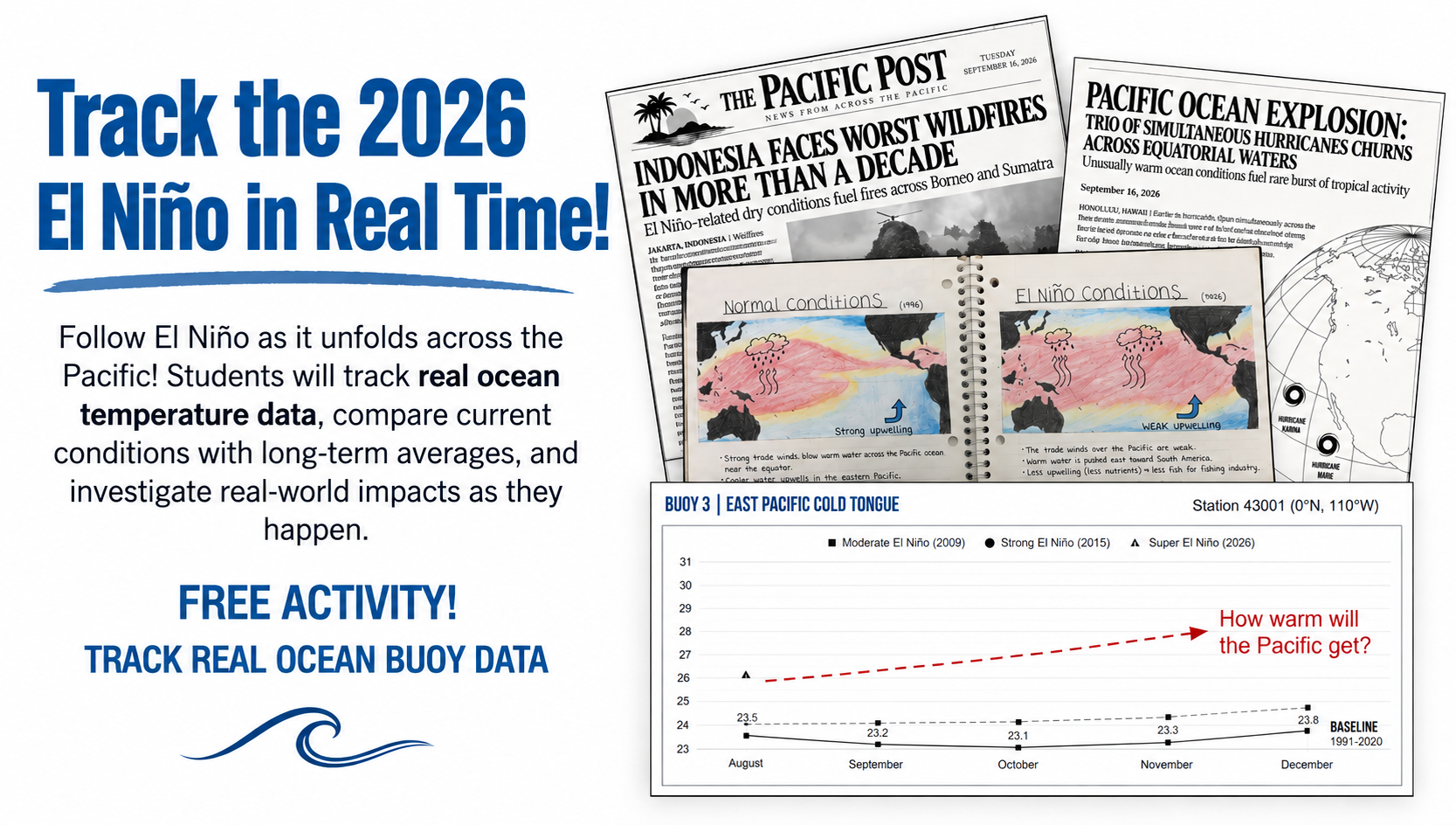
Tracking the 2026 El Nino
Students monitor SST at 3 ocean buoys in the Pacific Ocean through December 2026.
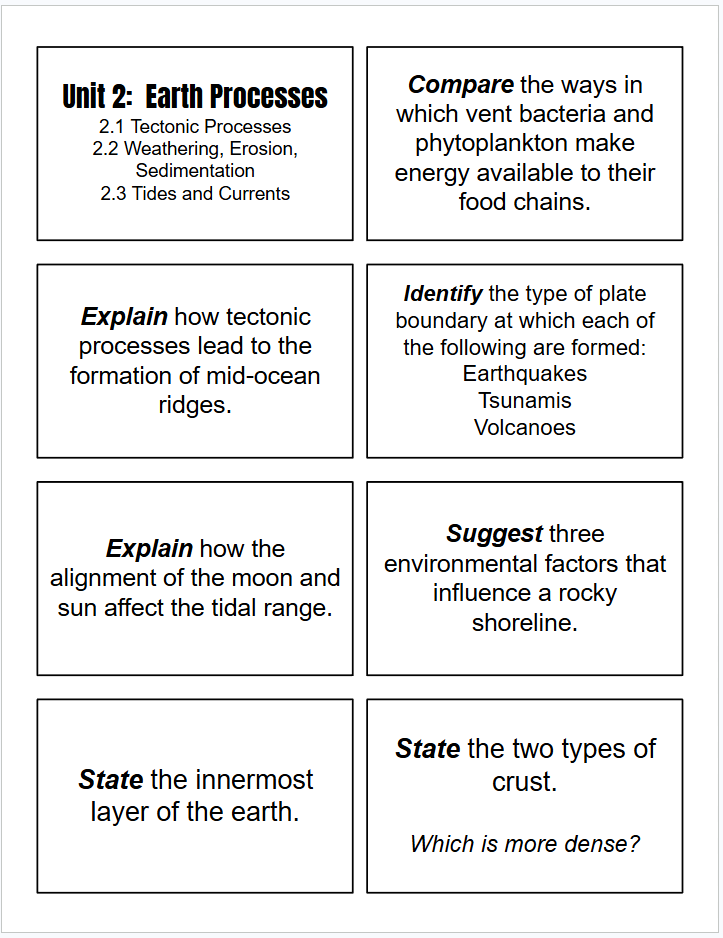
Printable Exam Prep Flash Cards | Unit 2 Earth Processes
Print these front/back and then cut out for a stack of 40 flash cards. These cards are available for all 5 AS Level units.
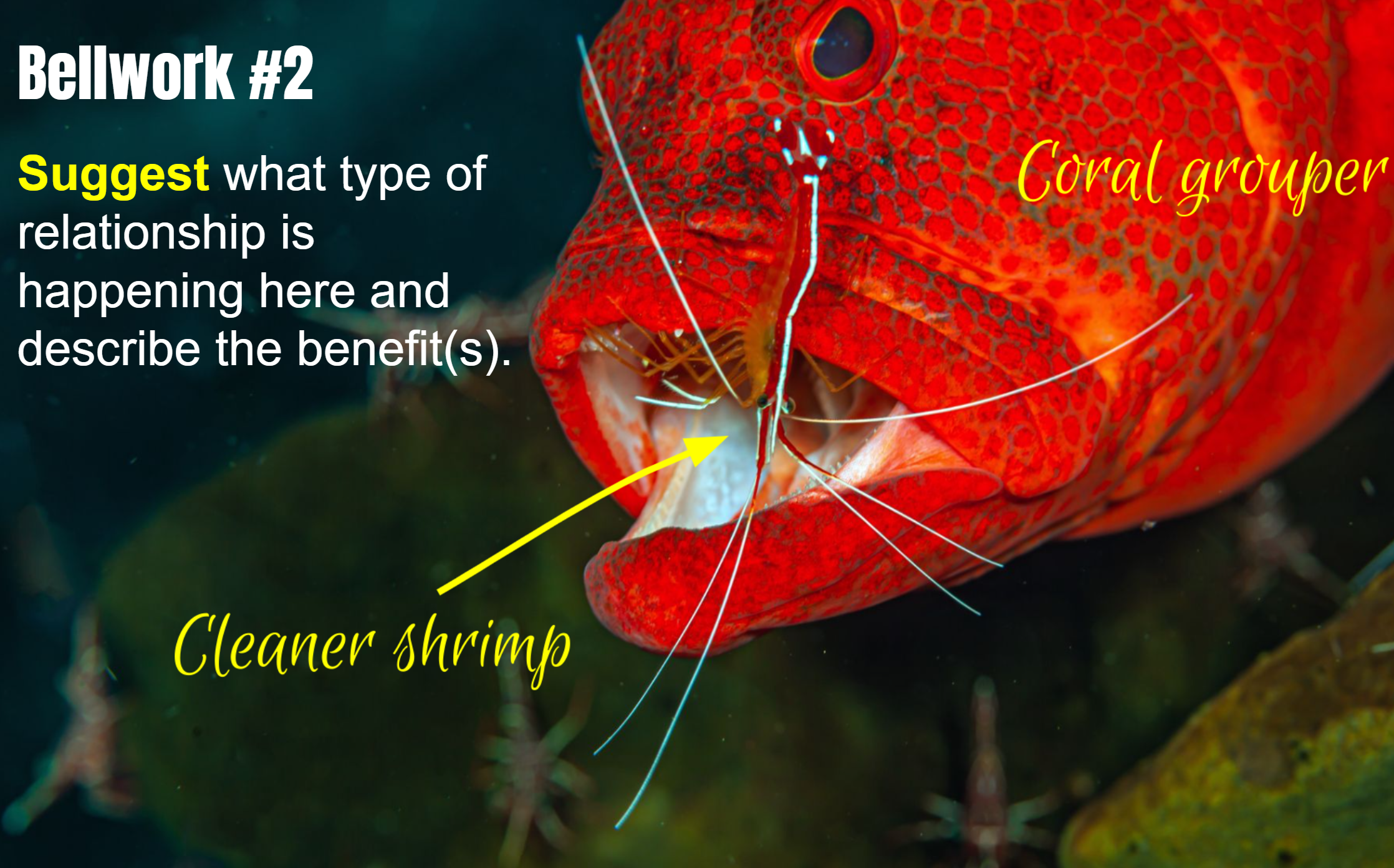
Bellringers | Unit 3.1 Marine Interactions and 3.2 Relationships
Daily bellringer slides. Fully editable.
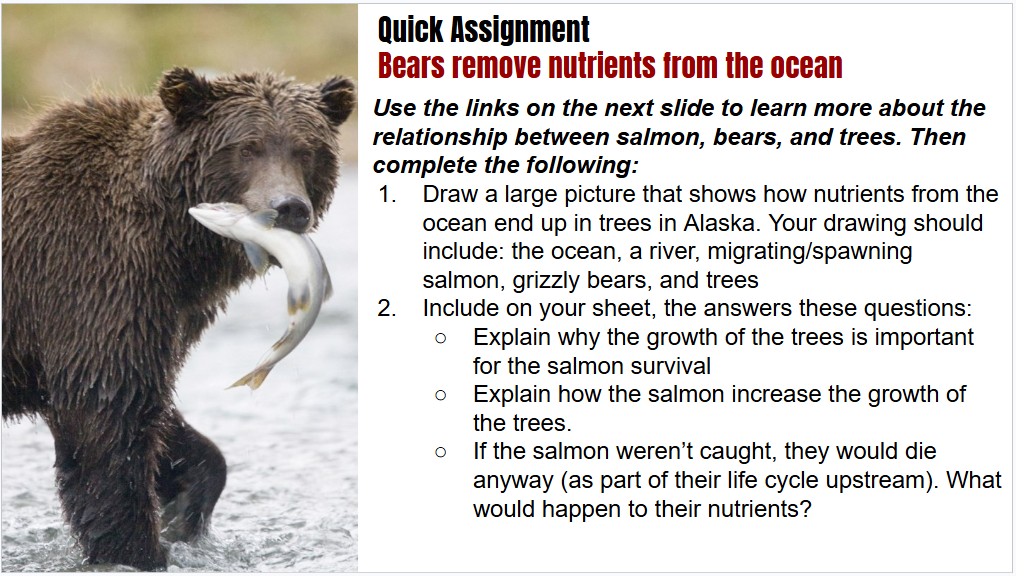
Drawing Prompt with video links | 3.3 Salmon Forests
Daily bellringer slides. Fully editable.
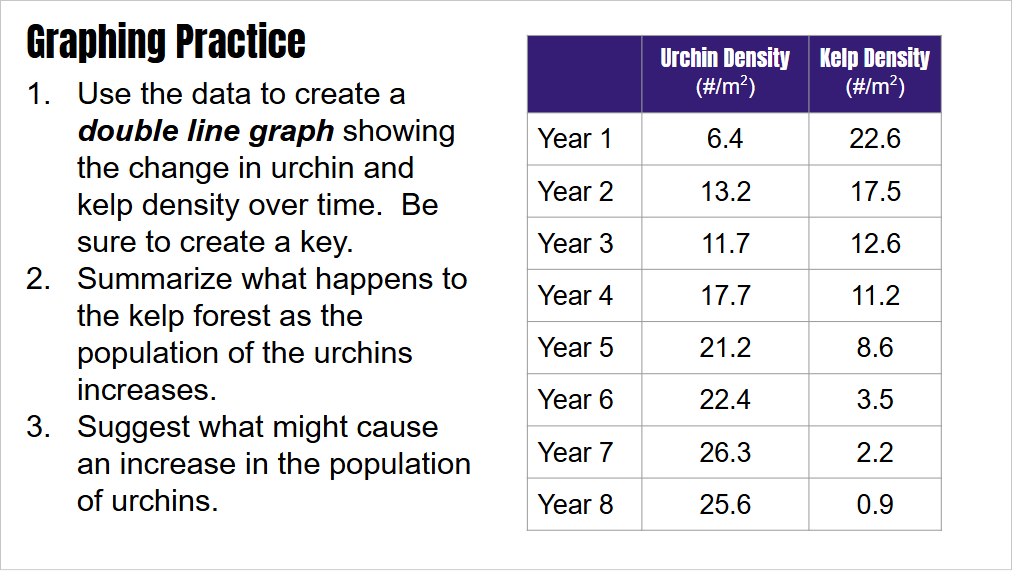
Data Set for Quick Graphing | 3.1 Sea Urchin Feeding Relationships
Daily bellringer slides. Fully editable.
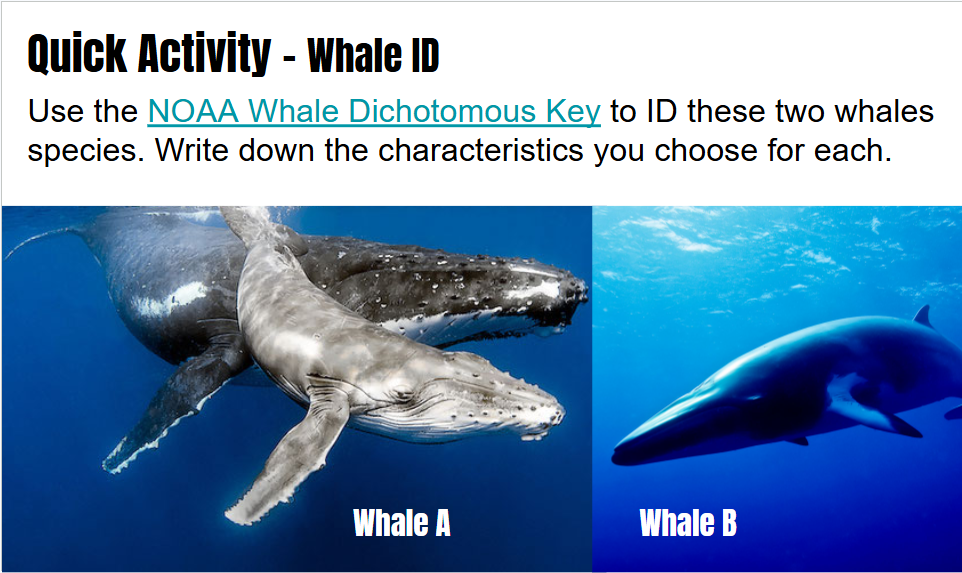
Dichotomous Key | Whales - 4.1 Classification
This is a really quick activity that gives additional dichotomous key practice, utilizing a NOAA identification key. Students ID 4 whale species. If you are looking to purchase a more in-depth dichotomous key acitivty, check out this Bony Fish Dichotomous Key.
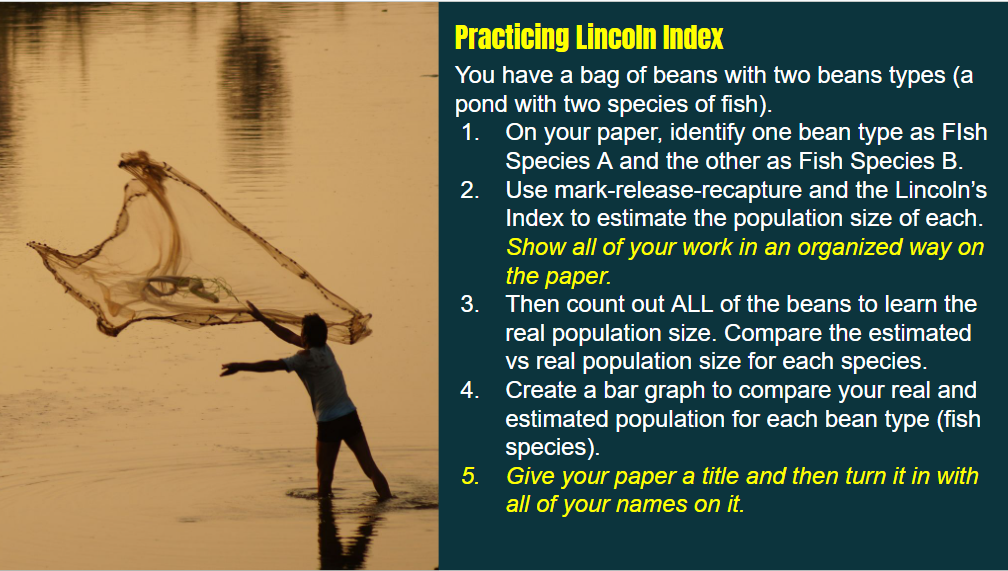
Practicing Lincoln Index | 4.4 Sampling Populations
This is a very simple way to practice Lincoln Index. Provide students with a cup of beans, have them “catch” and “mark” a sample, then release back. Then “catch” a second sample and calculate their estimate of the bean population. At the end, they can count the actual # of beans to see how close they were.
Very little prep - just a cup for each group, a few bean types, and a marker.
Slide 1 - Student instructions to display.
Slide 2 - Teacher instructions.