
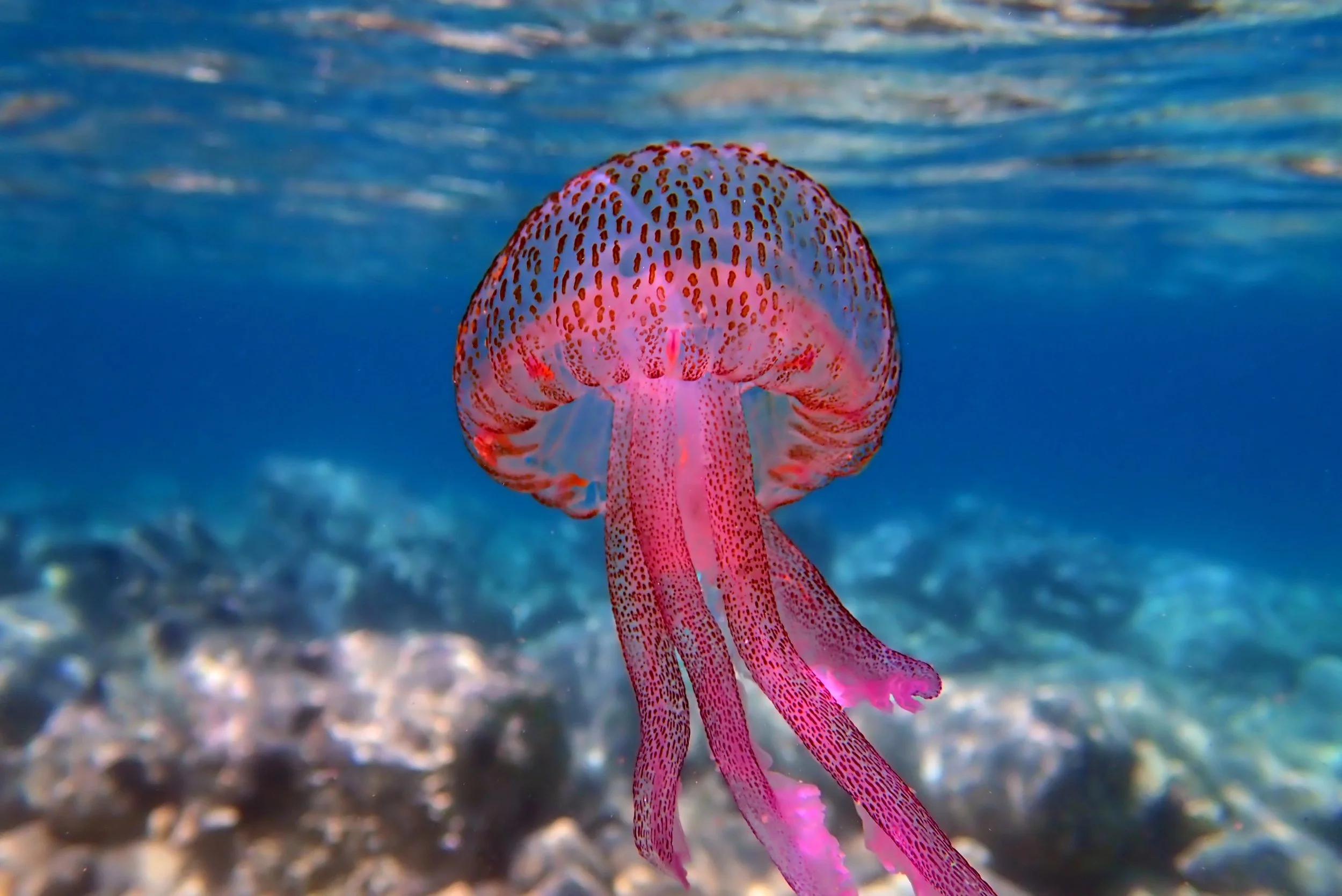
OCEANOGRAPHY & MARINE ECOLOGY STUDENT COURSEBOOK
An Interactive Ocean Science Coursebook Series for Independent Learners
Flexible for Grades 8-11
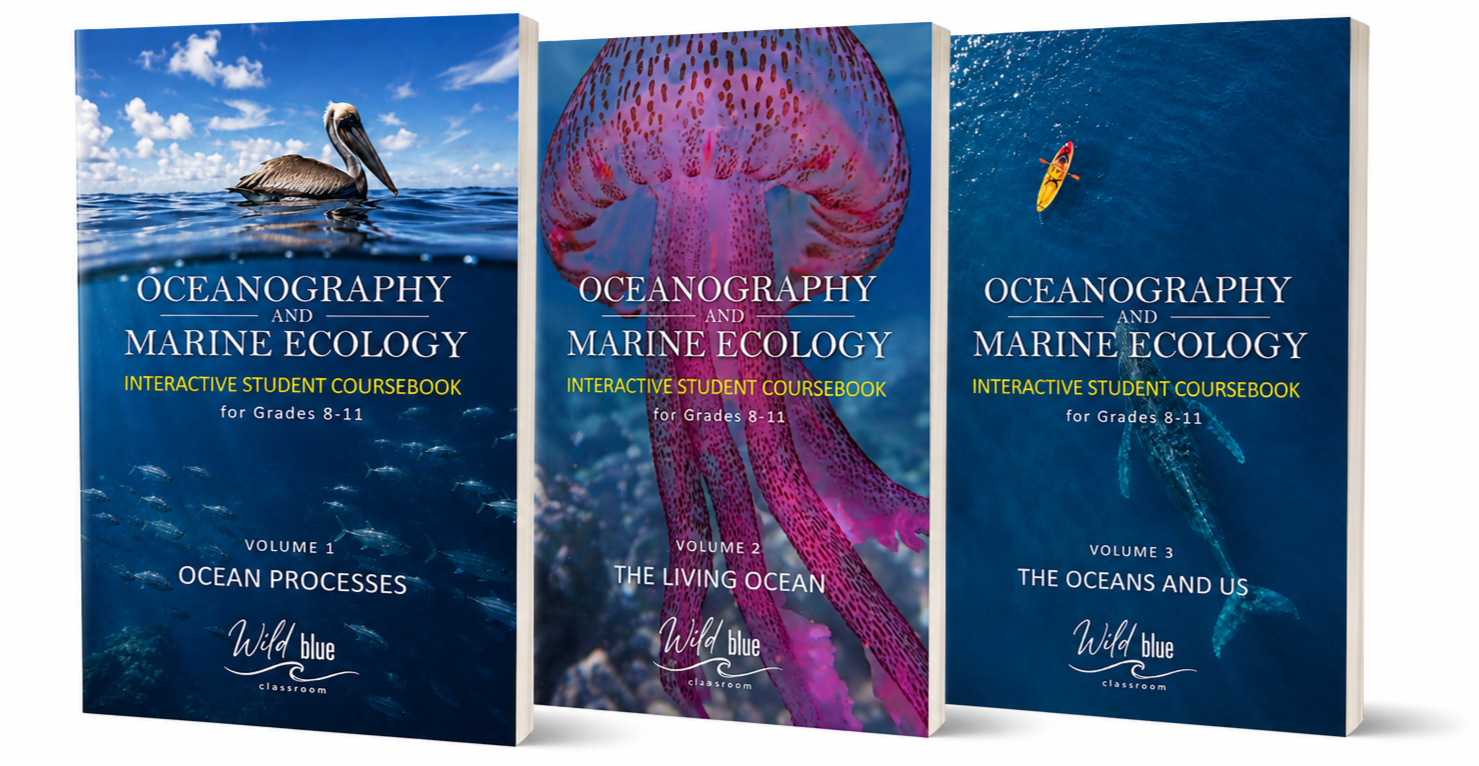

Volume 1:Ocean Processes
science skill focus :
Map-reading & geospatial thinking skills
Volume 2:The Living Ocean
science skill focus :
Field investigations & experimental data collection
Volume 3:The Oceans and Us
science skill focus :
Evidence-based conservation
& environmental decision-making

Volume 1: Ocean Processes
$36
✓ 230 full-color pages
✓ Students write on every page
✓ Graphing and data collection
✓ Real-world case studies and scientific data
✓ Interactive online investigations
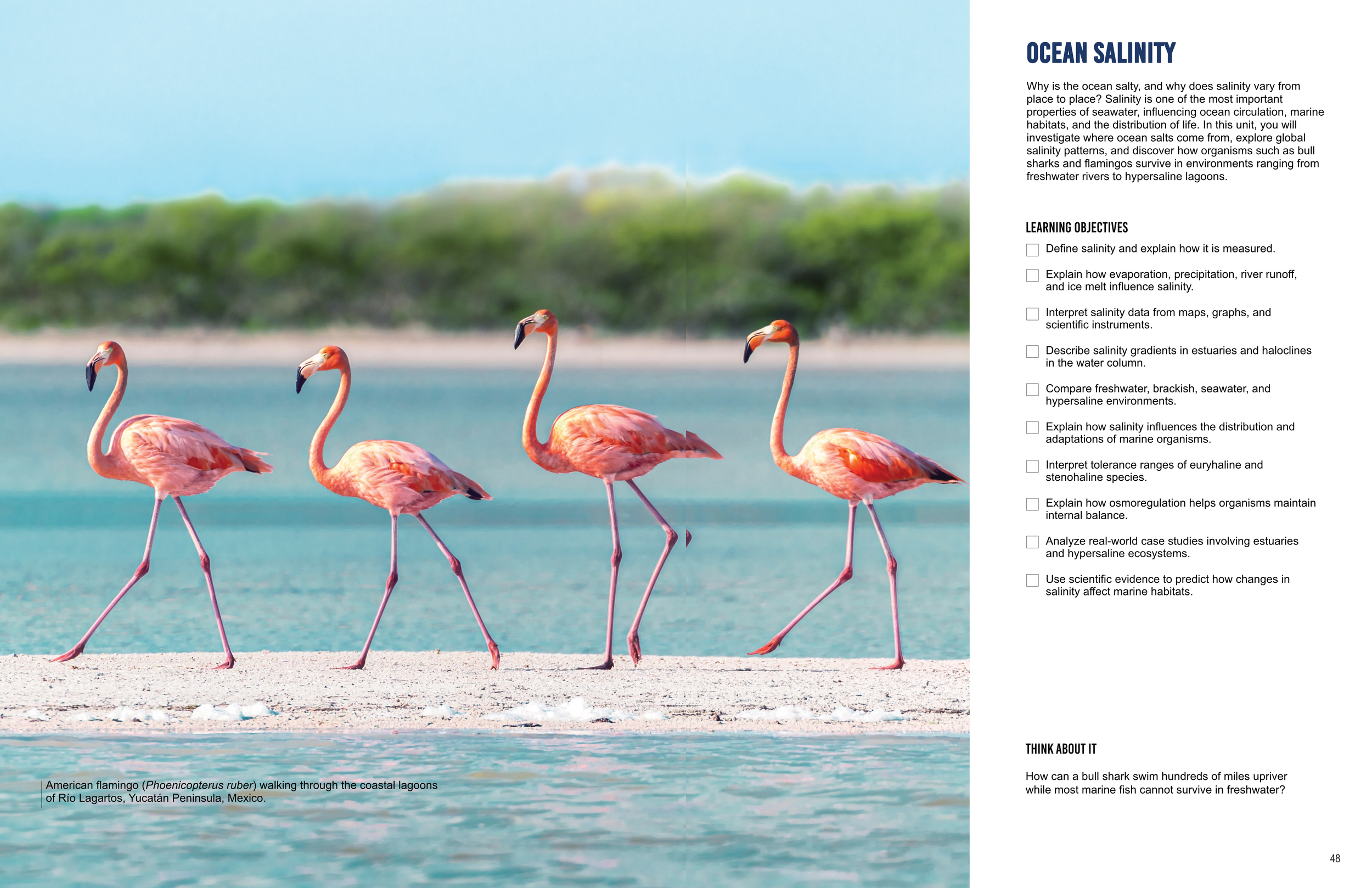
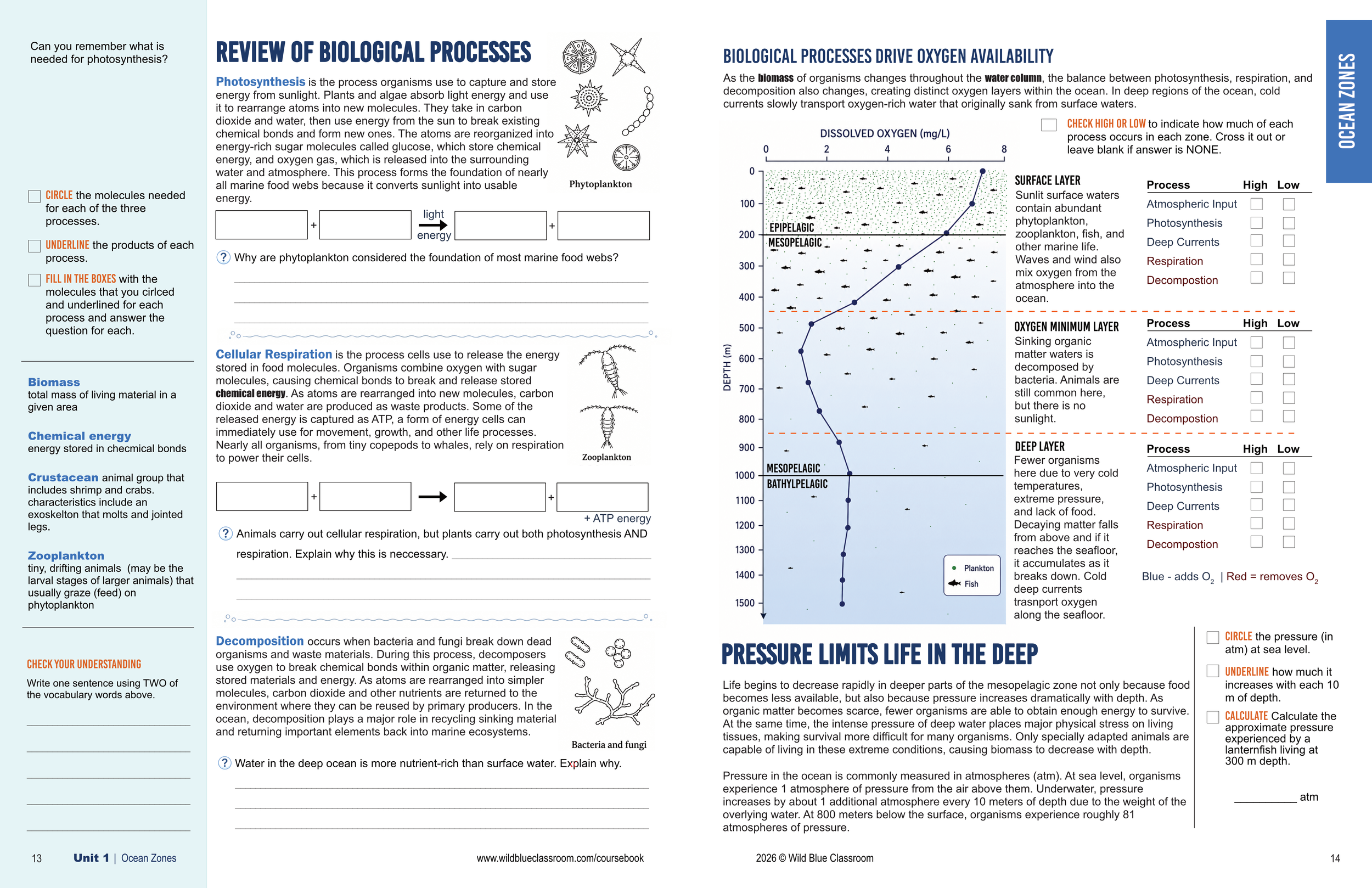
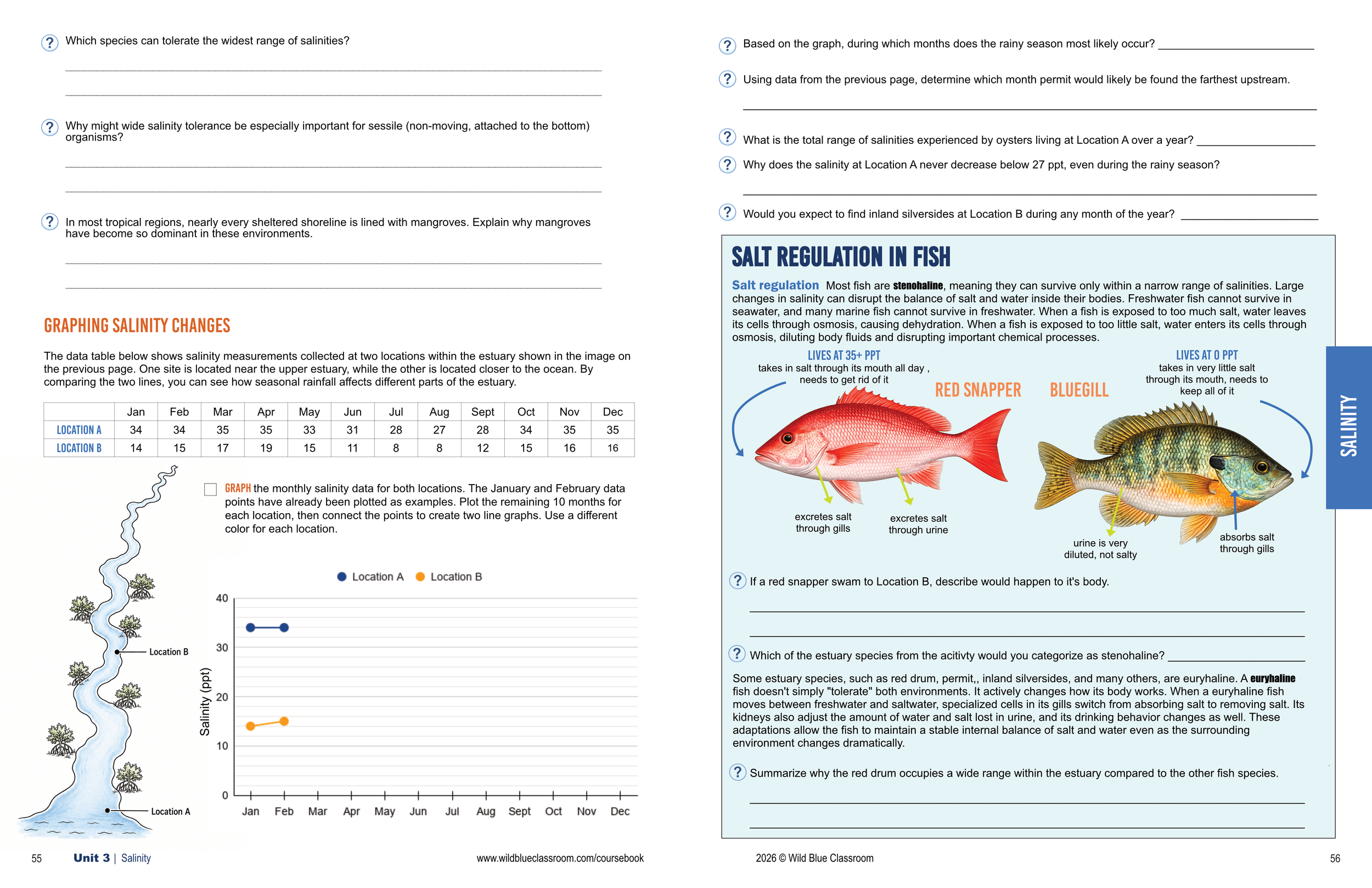
-
This (full-color!) three-volume interactive coursebook series provides a complete introduction to ocean science for independent learners in grades 8-11. The volumes begin with ocean processes, expanding into marine ecosystems, and concluding with human impacts and ocean resources.
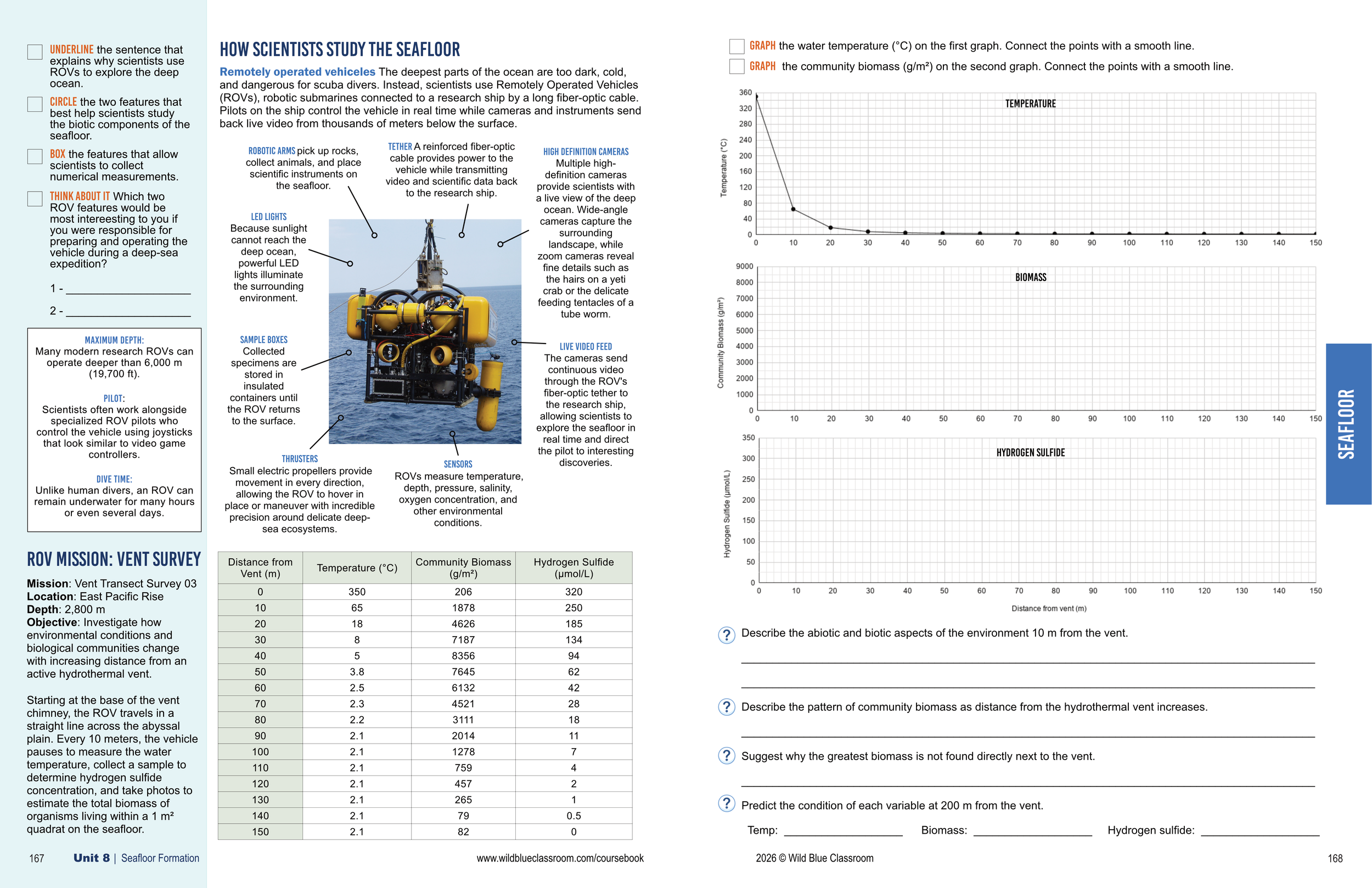
Rather than reading from a traditional textbook, students write directly in the coursebook as they complete annotations, questions, diagrams, investigations, graphing, mapping, and data review activities. Each volume emphasizes a different scientific skill, progressing from graphing and map interpretation to field investigations and experimental data collection, and finally applying scientific evidence to real-world conservation challenges and environmental decision-making.
This course takes a unique approach to learning about the oceans by combining a traditional textbook with interactive online activities that allow students to explore real-world ocean processes and authentic scientific data.
-
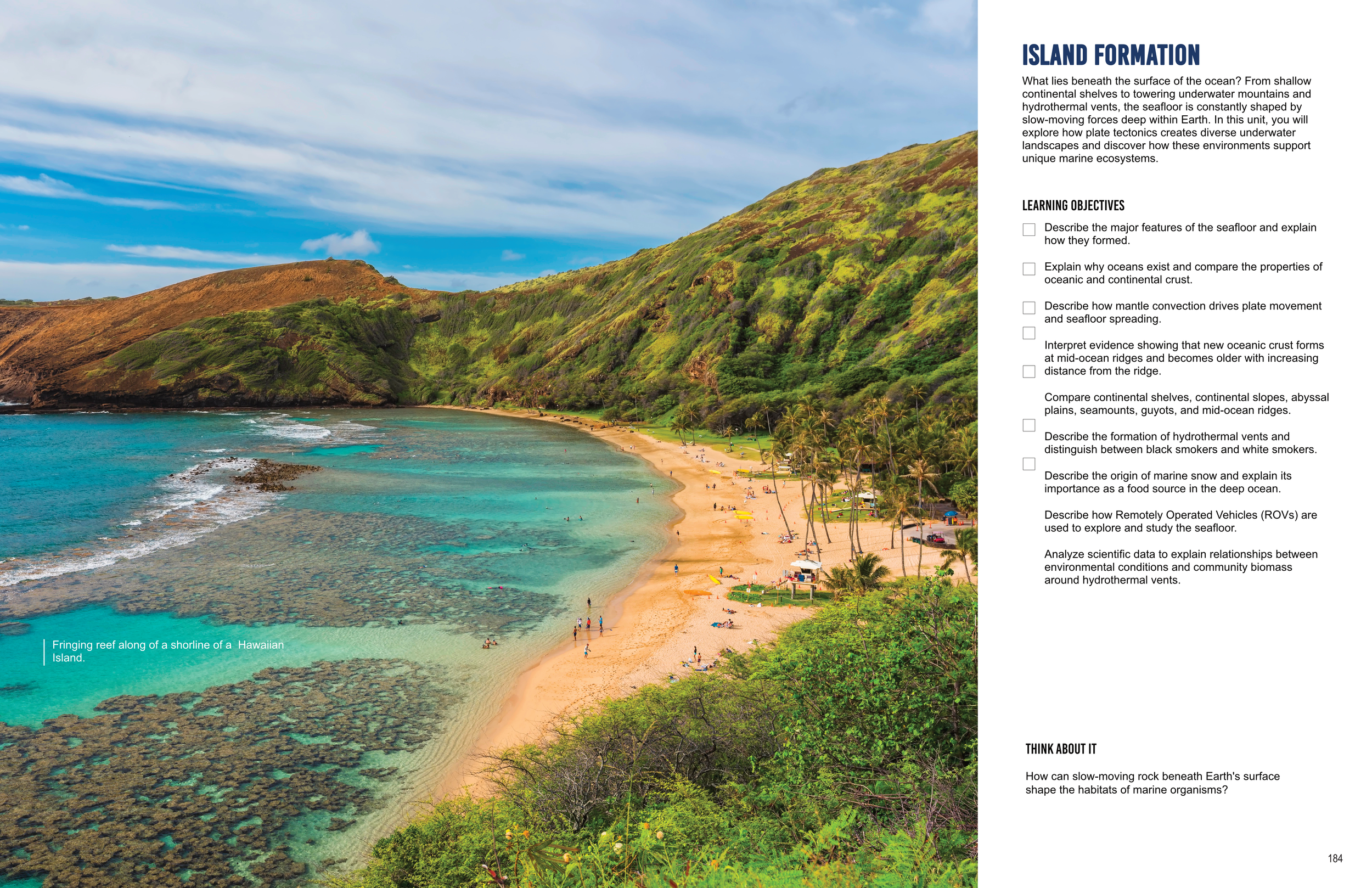
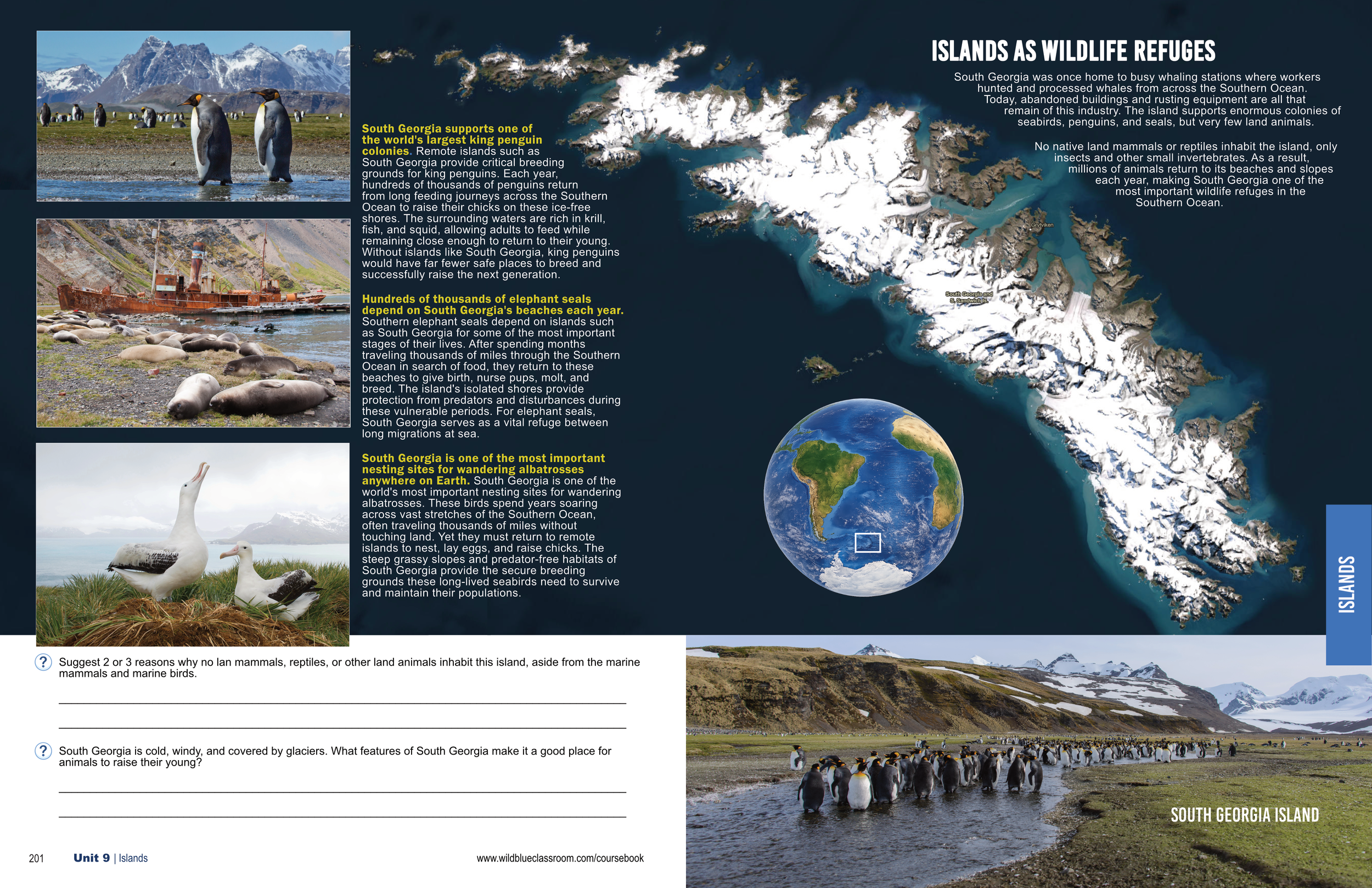
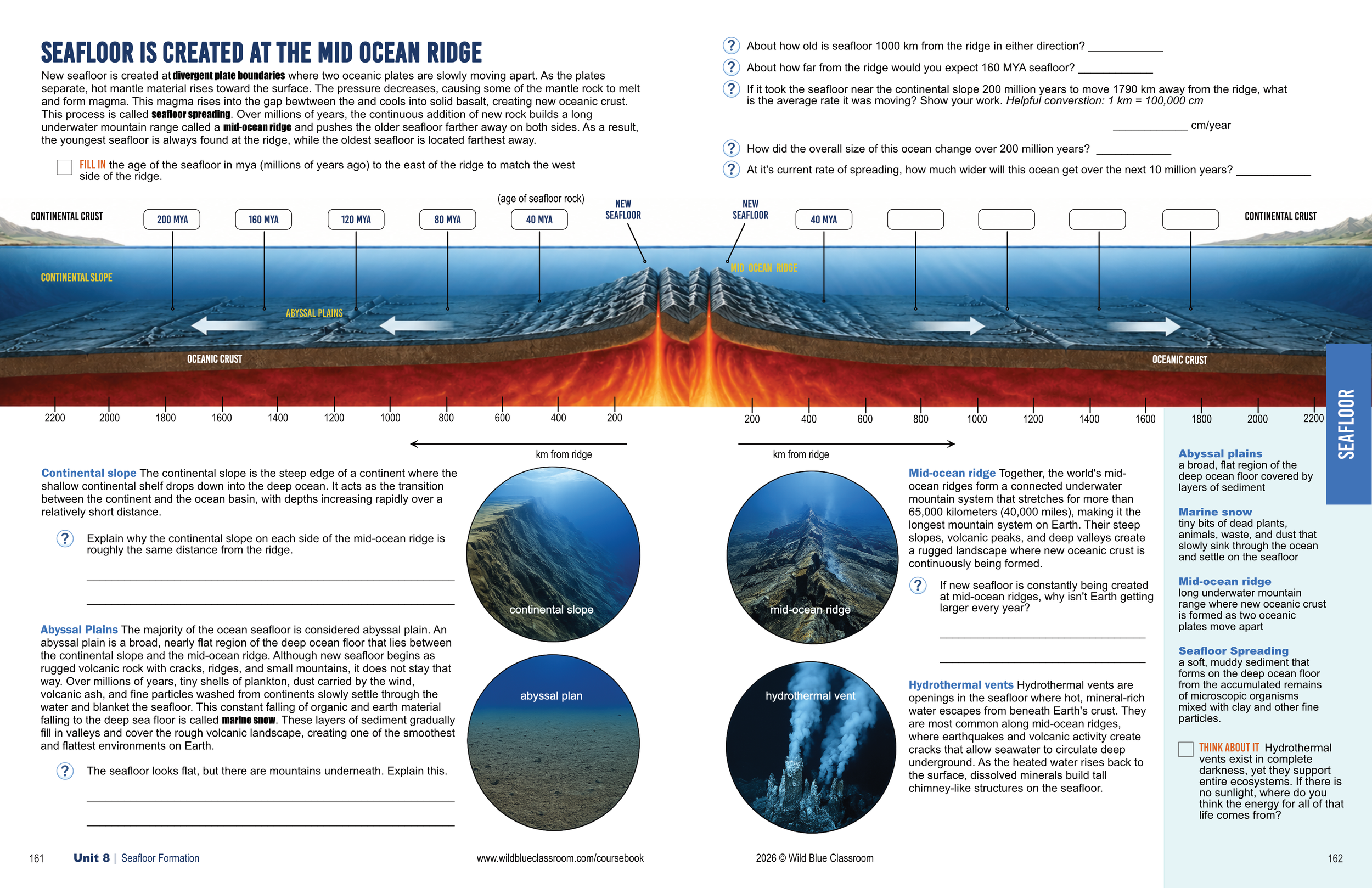
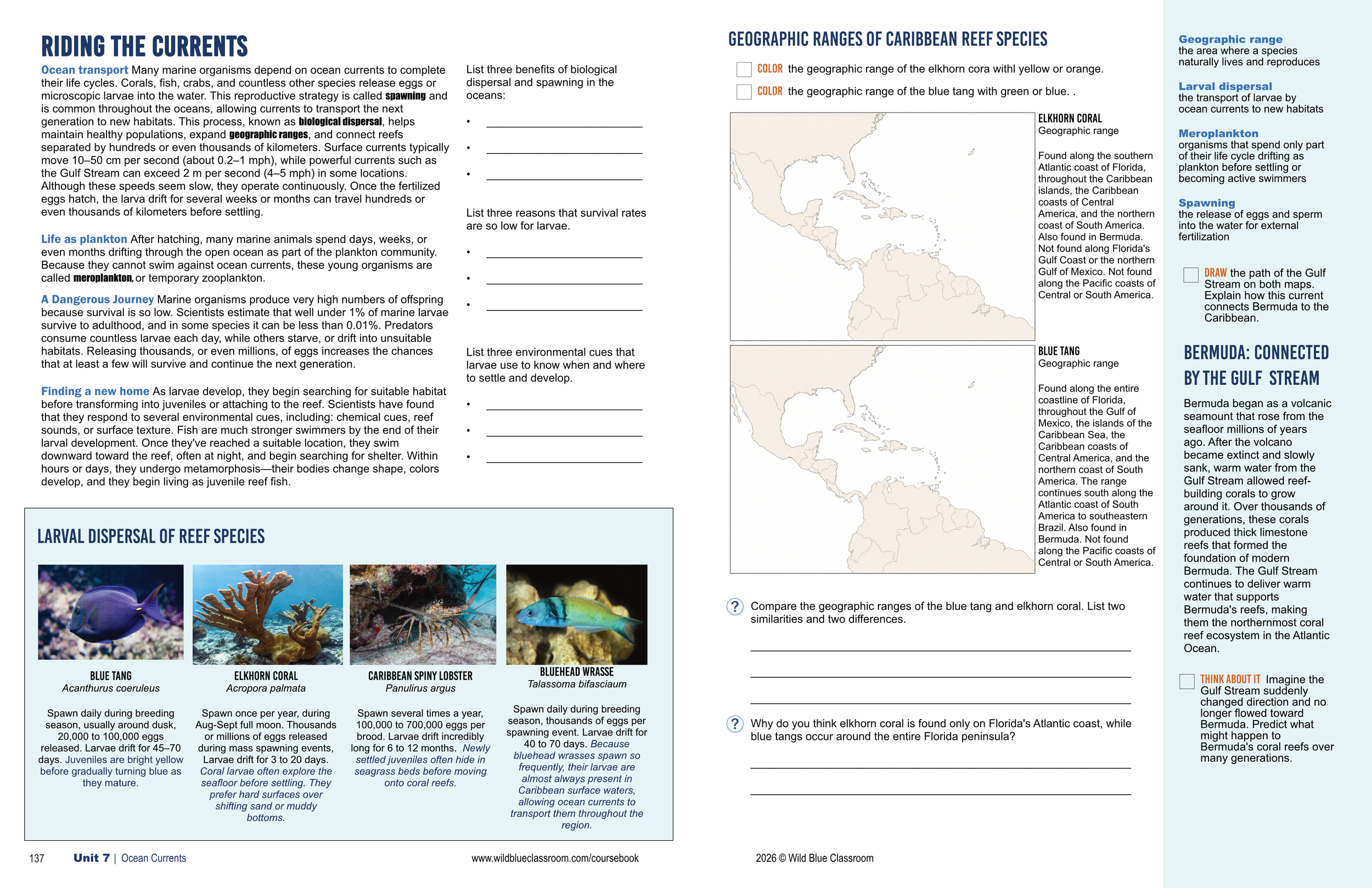
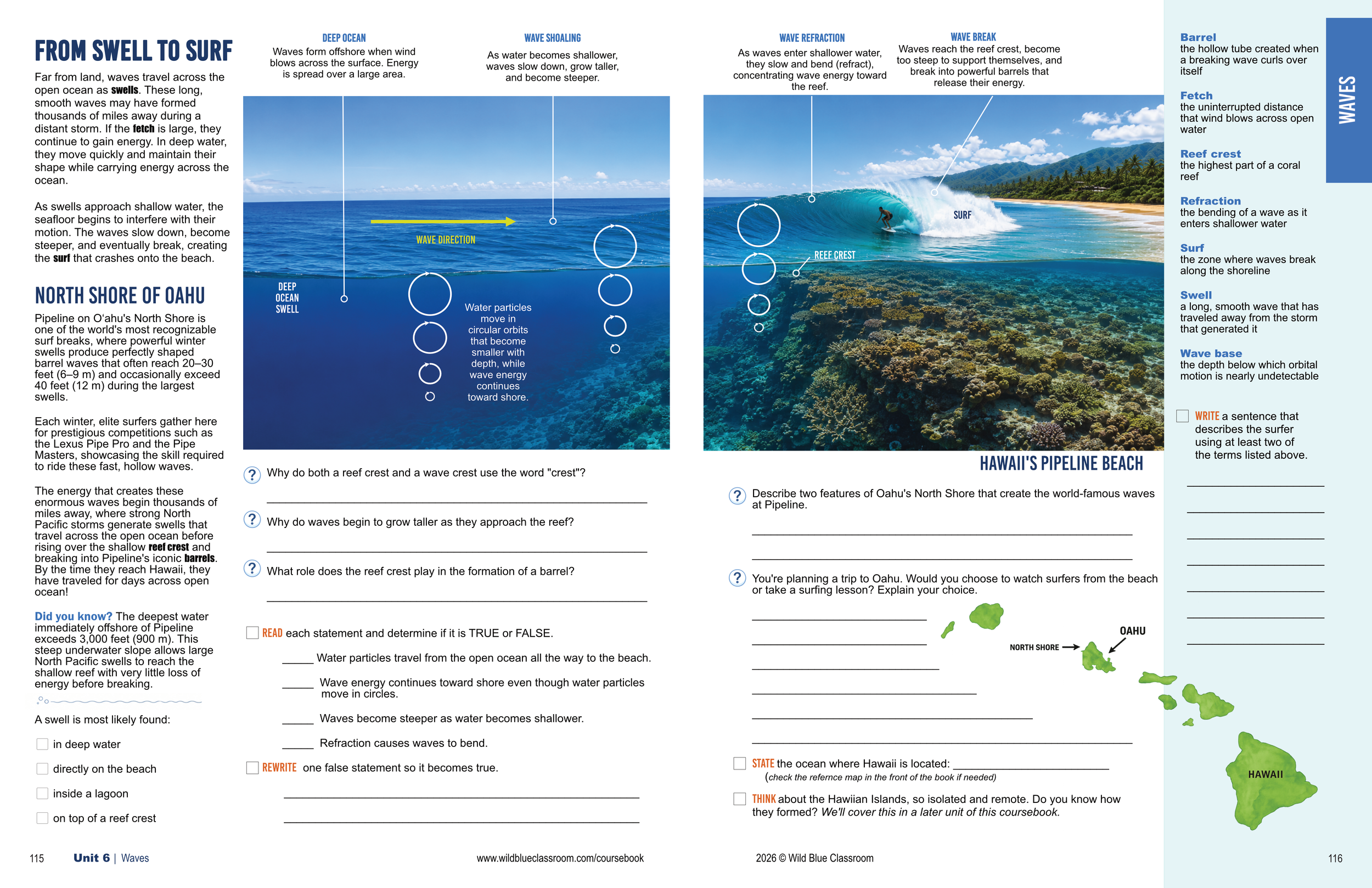
Students learn to interpret maps, graphs, satellite imagery, and real ocean data while exploring the physical processes that shape Earth's oceans. Discover how temperature, salinity, tides, waves, currents, and geology influence marine ecosystems around the world. Students work with real satellite imagery, ocean observations, NOAA data, and interactive online maps throughout the course.
Scientific Skill Focus
Mapping • Graphing • Online data collection • Geography
Topics Include
Ocean Zones • Temperature • Salinity • Buoyancy • Tides • Waves • Surface Currents • Seafloor Formation • Island Formation • Coastlines
-
Using the oceanography concepts introduced in Volume 1, students investigate how marine organisms are connected to one another and to the environments they inhabit. Explore ecosystems, biogeography, food webs, animal behavior, symbiosis, biodiversity, adaptation, migration, invasive species, and the complex relationships that shape life throughout the world's oceans.
Scientific Skill Focus
Field investigations • Species identification • Ecological data analysis • Animal Classification
Ecology is explored through specific regions
The Great Barrier Reef • Alaskan kelp forests and mudflats • Monterey Canyon deep sea • Beaches and reefs of the Bahamas • Mariana Trench • Indonesian mangrove islands • Tide pools in British Columbia • Northwestern Hawaiian islands • Seagrass Meadows of Shark Bay, Australia • Hydrothermal Vents of the East Pacific Rise • Arctic sea ice communities and haul-outs
-
Explore the many ways people depend on, study, and protect the ocean. Discover marine resources, fisheries, aquaculture, climate connections, conservation, restoration, marine technology, and the careers dedicated to understanding and managing our oceans.
Scientific Skill Focus
Real-world problems • Data interpretation • Making decisions • Career exploration
Topics Include
Remote tagging and tracking of species • Commercial fisheries • Aquaculture & seaweed farming • Resources extraction and energy projects • Marine protected areas • Transportation and shipping • Deep sea exploration • Monitoring a changing ocean • Hurricanes and natural disturbances • Careers in, on, & near the ocean